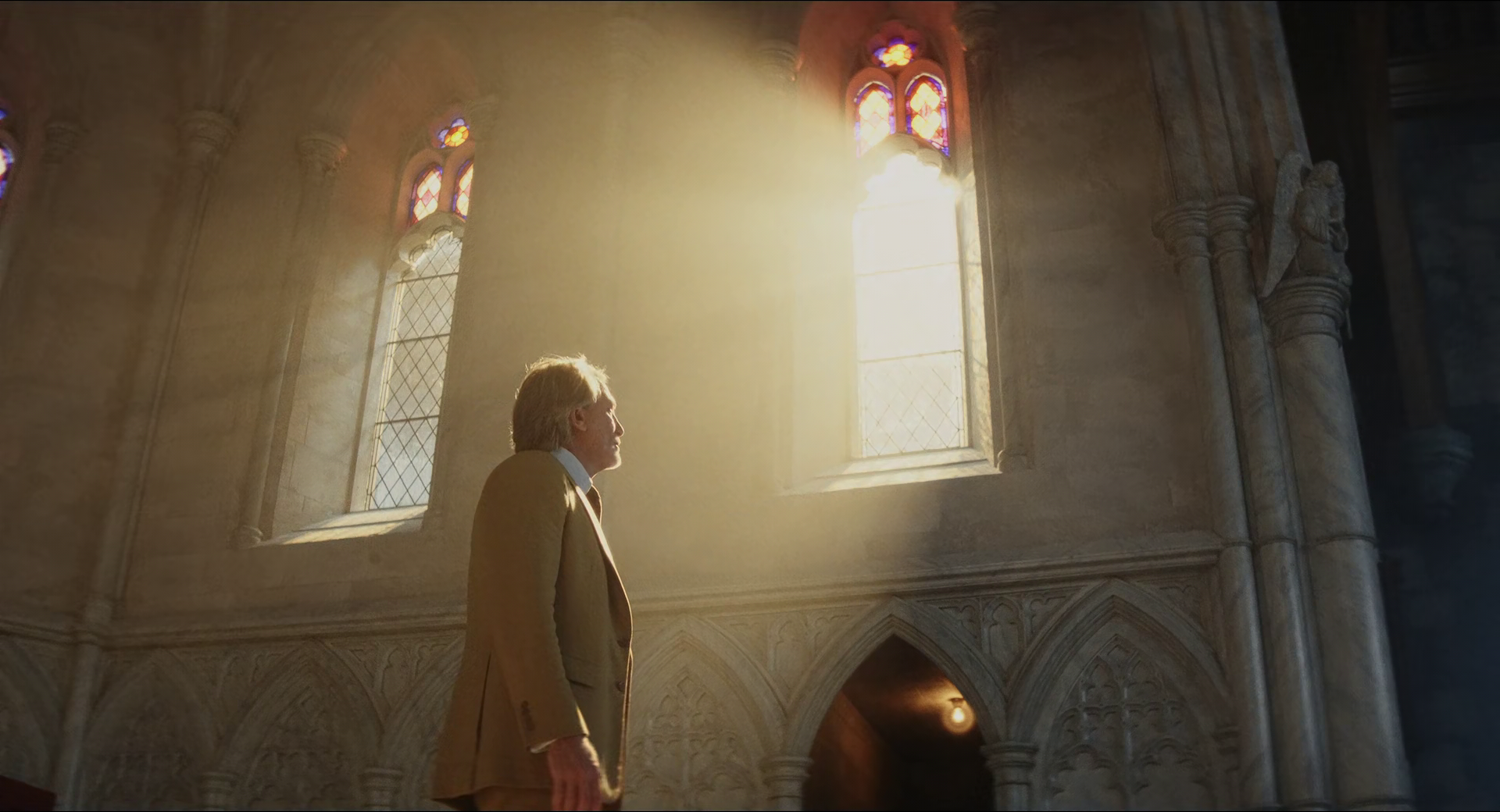
Benoit Blanc and the Critique of Reason
Detective fiction appeals to the part of us that thinks, ‘there is a reason for everything‘. We’re presented with the crime scene and then led on an adventure to uncover and link up all the clues, motivations, histories, in the right order. The whodunit question awaits an answer—the rationalist par excellence in the figure of the detective will provide it, if you haven’t already arrived at it yourself. We seek closure to some grisly murder and tragedy and we cannot help but follow the dictates of reason along the way, but do these two things always coincide?
Helmed by Rian Johnson, the Benoit Blanc films, consisting of Knives Out (2019), Glass Onion (2022), and Wake Up Dead Man (2025), are led by Daniel Craig who evidently has an absolute blast playing the titular detective. But ‘led’ is inaccurate. Blanc is never the central focus. He goes through little character development and his backstory is barely explored. This might be surprising to say until we realise that this is very much in keeping with the tradition of Arthur Conan Doyle’s Sherlock Holmes or Agatha Christie’s Hercule Poirot rather than that of recent TV depictions of detectives whose mental acuity elevates them to the status of star and quasi-superhero. Blanc is decidedly not the star, as Johnson himself explains, ‘The secret to each one of these movies is that Benoit Blanc is not the main character of these films. There’s always a protagonist who has some real stakes and skin in the game.’ The rationalist and their procedures help us arrive at the truth, but reason isn’t at the heart of these tales.
Before we get ahead of ourselves, let’s look at what the method of reason is all about from our dear detective, a self-confessed heretic ‘who kneels at the altar of the rational’:
I anticipate the terminus of gravity’s rainbow… It describes the path of a projectile determined by natural law. Et voila, my method. I observe the facts without biases of the head or heart. I determine the arc’s path, stroll leisurely to its terminus, and the truth falls at my feet.
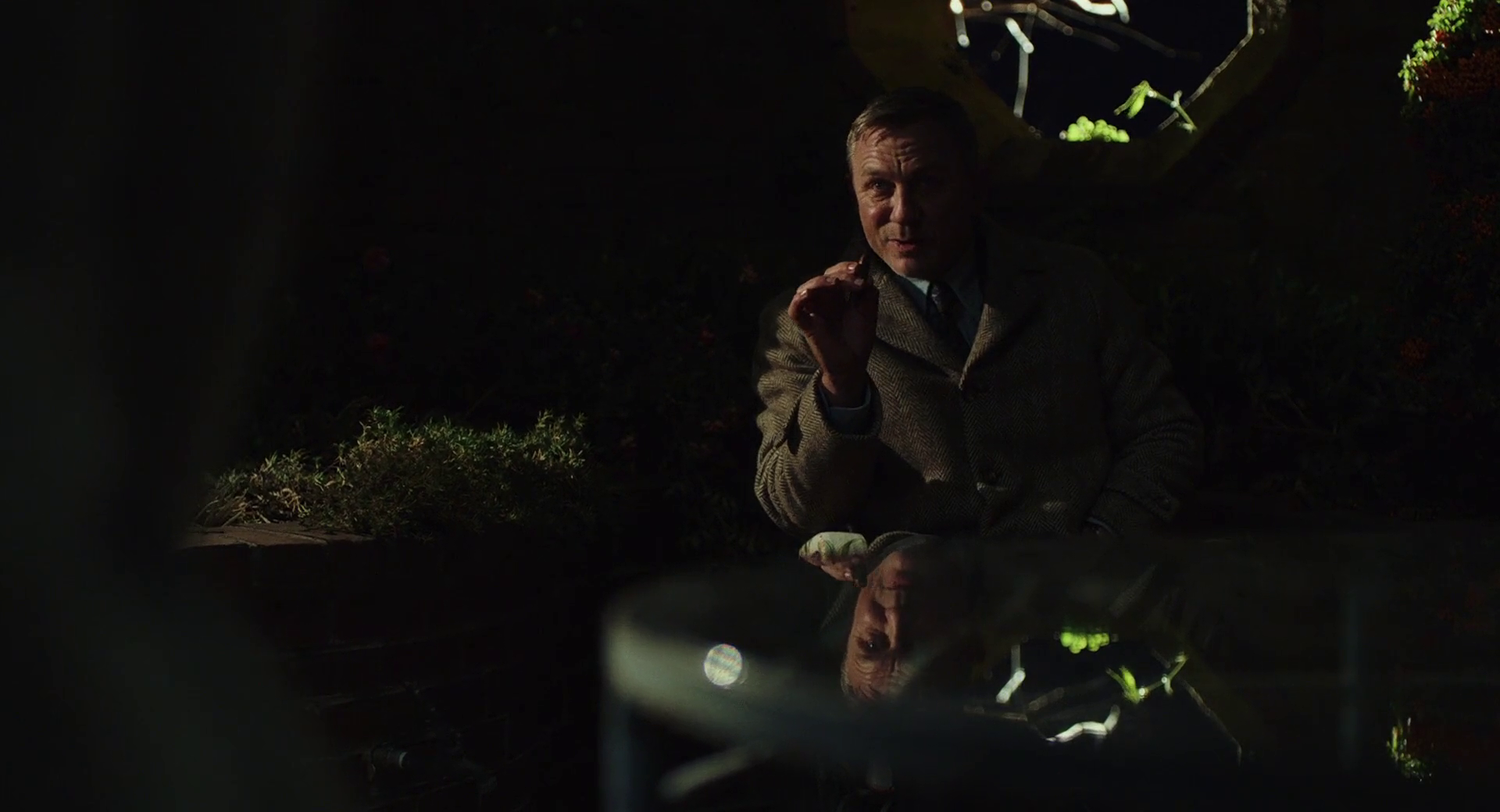
To reason is to trace the movement of facts and even of thought. What packet of evidence lies in the conclusion must surely already be there in the premises. At every step of the way, we assent to the idea that ‘there’s a reason for this‘. The exact means of obtaining answers is at once complex, involving a mix of attentive observations and plausible inferences, and as simple as the following of a projectile’s path. For what is the endpoint but a consequence necessitated by the projectile’s starting point coupled with some gravitational law? In one of Edgar Allen Poe’s letters, he calls his detective stories ‘tales of ratiocination’, a sentiment Blanc surely shares: ‘This was dressed as a miracle. It’s just a murder. And I solve murders.’ There is nothing about these mysteries that reason cannot eventually unravel. Reason—not God or faith—will provide.
The rationalism of Blanc is suitably contrasted with the lack thereof in the so-called deduction game Among Us or the brute force required to win at Clue, all ‘dumb things’ Blanc admits he’s bad at. To call them mysteries at all is an insult to the rationalist, for these games might as well come packaged with the warning label ‘No reasoning required!’ Conversely, this commitment to the principle of reason in seeking the truth proves to be his Achilles’ heel in the second film. On Miles’s island, Blanc cannot help but look for reasons where there are none, or at least none quite as complex or layered as he would have desired. Maybe reason doesn’t always provide, after all?
The Benoit Blanc trilogy (Dear Netflix, please drop the subtitle ‘A Knives Out Mystery’) celebrates reason and the great inheritance of detective fiction, but I’m struck by how much more interested it is in critiquing reason. The films do reserve their climaxes for the detective’s breathtaking untangling of lies and conspiracies, but the ‘mystery’ part takes a backseat. Really, the puzzles are treated with a touch of playful (ir)reverence:
- Harland, an esteemed writer of detective fiction, rather than being pained with the news of his impending death, swiftly changes gear and fashions the circumstances of his own suicide, all the while delighting in and noting down the efficiency of the method that’s killing him. And all this occurs a third of the way through Knives Out, when the audience is shown in no uncertain terms that the family patriarch did, in fact, slit his own throat.
- In Glass Onion, Miles takes pride in having an eye for mystery fiction, even taking inspiration (and paid ideas!) from writers like Gillian Flynn to design and play at solving a murder mystery. The rug is pulled out from under us when one murder mystery is replaced by another murder mystery twice over, only for all this convolution to be the result of the antics of bravado-laced Miles, whose identity and actions are fully transparent to Blanc throughout, much to his chagrin.
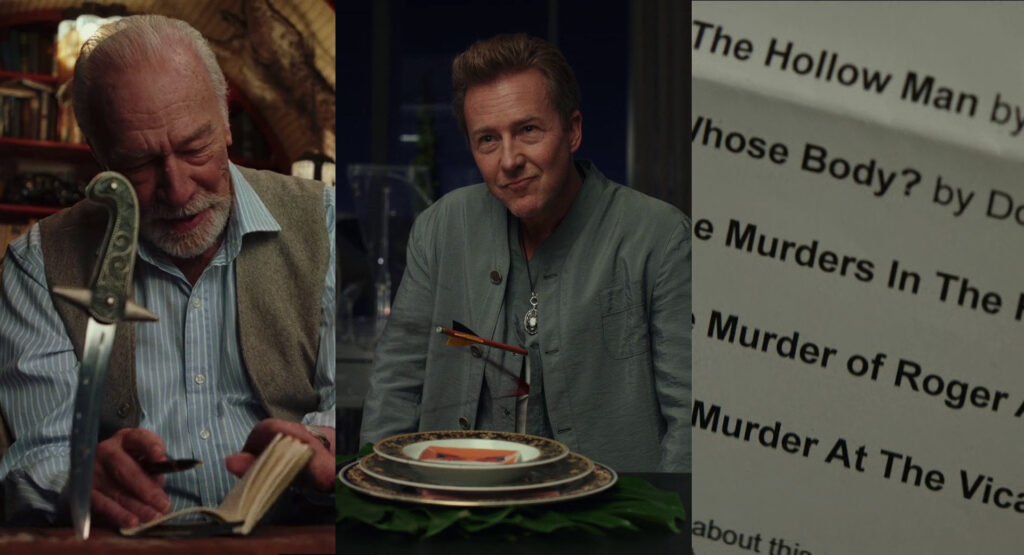
- The central locked room mystery of Wake Up Dead Man is constructed with explicit assistance by way of a reading list of famed locked room mysteries. It’s no surprise that after working through the logically exhaustive set of options (detailed in John Carr’s The Hollow Man), Blanc solves the impossible mystery almost immediately upon arrival at the crime scene, even if we’re not privy to his thoughts just yet.
The remaining details surrounding the murders….? As much of an afterthought as the algorithmic steps of filling out the rest of a puzzle after the corner pieces have already been put in place. This isn’t to say that the films don’t have fun working through red herrings and Chekhov’s guns—boy, do the films relish in them!—but it becomes crystal clear that novelty isn’t the point. And no, I doubt Johnson is being subversive for subversion’s sake. He is, in his own way, intentionally paying homage to the genre greats who have mastered the art of ratiocination and who have sliced and diced every which way murder mysteries can be told.
It pays dividends to think of these murder mysteries not as the end but as the means for some other end, something that’s prized higher than reason or truth:
The complexity and the gray lie not in the truth, but what you do with the truth once you have it.
The drama lies not in the disclosure of the operations and results of reasoning, but in the closure pertaining to what the characters do with the truth once it’s found. Our beloved trio of protagonists relate to truth in refreshingly arational ways: Marta is Harland’s nurse who has a ‘regurgitative reaction to mistruthing’ and who concerns herself with administering care for Harland (and Fran); Helen is an elementary school teacher who disrupts the disruptors by destroying Miles’s leverage over them, freeing them up to testify to the truth regarding her sister; Father Jud is a boxer-turned-priest who finds himself distracted by the elaborate whodunit game, turned away from his real calling to serve all, which includes listening to truth-tellings in the form of confessions from the broken and the guilty.

They’re not sidekicks whose role is to be the audience surrogate and exclaim ‘Wow!’ in the face of the detective’s genius. The rational ‘machine that unerringly arrives at the truth’ or the ‘checkmate moment’ is of little interest to them. Our Watsons instead demonstrate compassion, bravery, and grace respectively. It is appropriate then that all the climaxes follow a twin structure. One half is supplied by the detective’s procedures of reason, the other by the heart and soul of our true protagonists. The game of whodunit isn’t identical to the tragedy of murder. Reason and truth alone do not suffice for closing the story out, not unless we also fully reckon with everything that is done with the truth and everything that the truth does to us.
To Blanc’s credit, he recognises the purview of his rationalist tendencies. He cautions Helen, ‘I’m not Batman. I can find you the truth, I can get the evidence, I can present it to the police and the courts, but that’s where my jurisdiction ends.’ Father Jud brings out in him a like realisation, a moment of revelation, his Road to Damascus. Over and over, Blanc cedes the denouement over to the protagonists in recognition of the limits of reason, the limits of his own role as rationalist.
I’m reminded of Immanuel Kant’s claim: ‘I had to deny knowledge in order to make room for faith‘ (Critique of Pure Reason B.xxx). To critique reason is to perform a thorough appraisal of our rational faculty. Reason cannot grant us access to knowledge of everything, so we must tread carefully and rein in the part of us that thinks otherwise. In broad strokes, Blanc and Kant may very well be kindred spirits in their shared critique of reason.
Leave a Reply